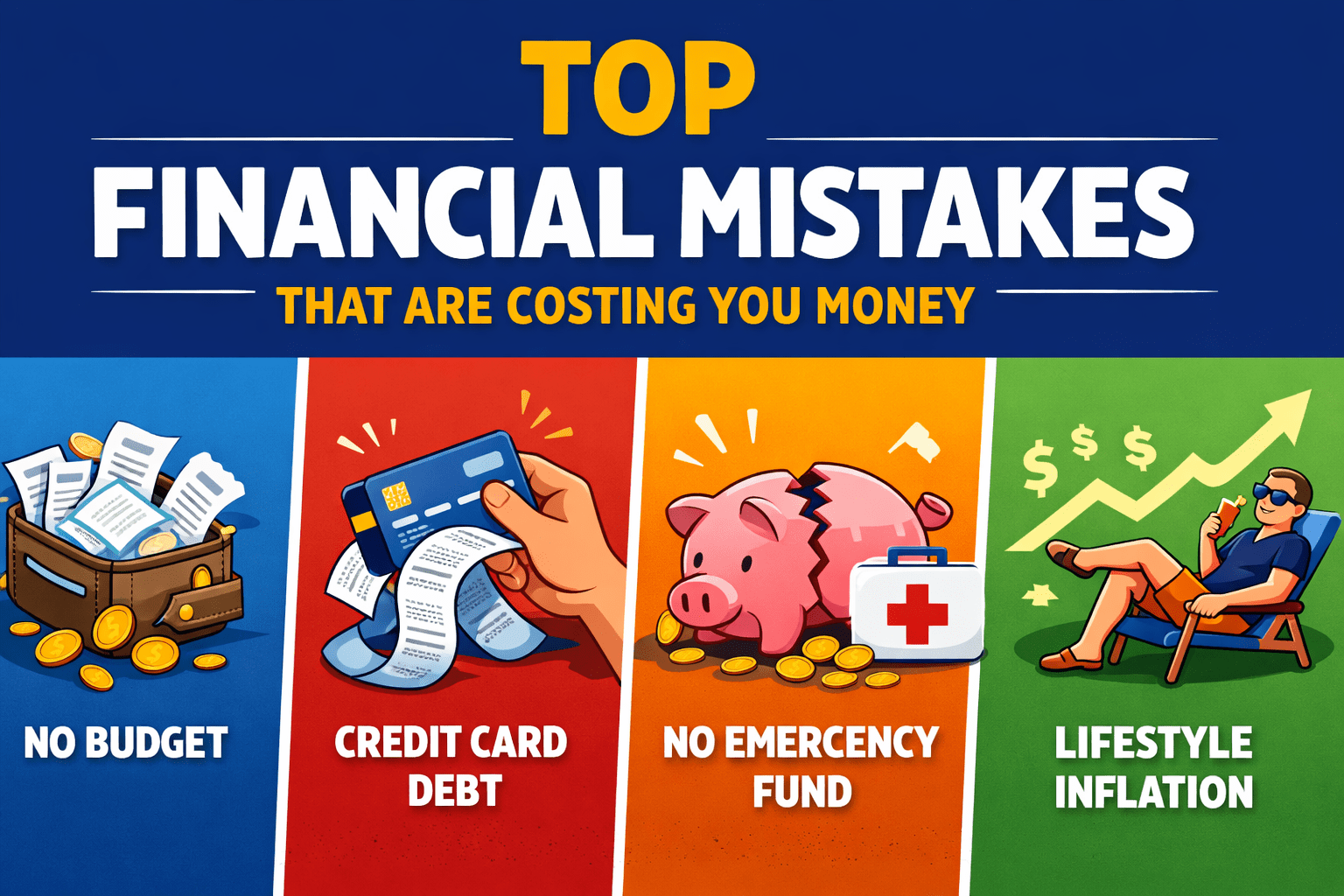
Discover the most common financial mistakes that silently drain your money. Learn how to budget, save, invest, and make smarter money decisions to protect and grow your wealth. Avoid costly habits today for a secure financial future.
Introduction to Costly Financial Mistakes
Money mistakes don’t usually feel dangerous in the moment. They’re quiet, sneaky, and often disguised as “normal” behavior. But over time, these small decisions pile up like leaks in a bucket—slowly draining your hard-earned cash.
Why Small Money Mistakes Matter
Skipping a budget, paying only the minimum on credit cards, or delaying savings may not hurt today. But months or years later, you’ll wonder where all your money went.
How Bad Habits Quietly Drain Your Income
Think of bad financial habits like termites. You don’t see them at first, but eventually, the damage becomes obvious—and expensive.
Living Without a Budget
The Real Purpose of Budgeting
A budget isn’t a punishment. It’s a roadmap. Without it, your money decides where to go instead of you.
How Overspending Becomes a Lifestyle
No budget means impulse buys, emotional spending, and constant “just this once” moments. Suddenly, payday feels like water slipping through your fingers.
Ignoring Emergency Savings
Why Emergency Funds Are Non-Negotiable
Life happens—medical bills, car repairs, job loss. An emergency fund is your financial seatbelt.
What Happens When Life Throws a Curveball
Without savings, emergencies turn into debt. And debt turns into stress, sleepless nights, and long-term financial damage.
Relying Too Much on Credit Cards
The Trap of Minimum Payments
Paying the minimum feels safe, but it’s a slow poison. Interest keeps growing while your balance barely shrinks.
How Interest Eats Your Wealth
High-interest debt is like running on a treadmill—you’re exhausted but not moving forward.
Not Tracking Your Expenses
Where Your Money Actually Goes
Most people underestimate spending. Coffee here, subscriptions there—it adds up fast.
Tools That Make Tracking Easy
Apps, spreadsheets, or even a notebook—pick one. Awareness alone can change your spending behavior dramatically.
Delaying Investments
The Cost of Waiting
Waiting for the “perfect time” to invest usually means missing out.
Power of Compounding Explained Simply
Compounding is money making money. The earlier you start, the harder your money works for you—even while you sleep.
Keeping All Money in Savings Accounts
Inflation vs Savings
Savings accounts are safe but slow. Inflation quietly reduces your purchasing power every year.
Smarter Places to Park Your Money
Balanced investing helps your money grow instead of shrinking in silence.
Ignoring Retirement Planning
Why Retirement Is Everyone’s Problem
Retirement isn’t just for older people. The earlier you plan, the easier it becomes.
Common Retirement Myths
“I’ll start later” is the most expensive lie people tell themselves.
Falling for Lifestyle Inflation
When Income Rises but Savings Don’t
More money shouldn’t mean more spending. But many people upgrade everything—except their savings.
Staying Grounded Financially
Enjoy life, yes—but pay your future self first.
Not Having Financial Goals
Goals Give Money Direction
Without goals, money feels pointless. With goals, every dollar has a mission.
Short-Term vs Long-Term Goals
Balance today’s happiness with tomorrow’s security.
Paying Unnecessary Fees
Hidden Bank and Subscription Fees
Tiny fees are like silent thieves. You don’t notice them—until you do the math.
How to Spot and Eliminate Them
Review statements regularly. Cancel what you don’t use.
Avoiding Financial Education
Why Money Skills Matter
No one is born knowing how money works. Learning is power.
Learning Without Feeling Overwhelmed
Start small. One concept at a time beats doing nothing.
Trusting Financial Advice Blindly
Friends, Social Media, and Bad Advice
Just because someone sounds confident doesn’t mean they’re right.
How to Verify Financial Information
Cross-check sources. Learn the basics so you’re not easily misled.
Not Insuring Yourself Properly
The Cost of Being Underinsured
One accident can wipe out years of savings.
Insurance as Financial Protection
Insurance isn’t an expense—it’s a safety net.
Letting Emotions Control Money Decisions
Fear, Greed, and Impulse Spending
Emotions are expensive. Panic selling, impulse buying—both hurt your finances.
Building a Calm Money Mindset
Slow decisions are usually better money decisions.
Conclusion
Fixing Mistakes One Step at a Time
The good news? Financial mistakes are fixable. You don’t need to be perfect—you just need to be aware. Start with one change today, and future you will thank you.
FAQs
1. What is the biggest financial mistake people make?
Living without a budget and ignoring savings are the most common and costly mistakes.
2. How can I stop wasting money?
Track expenses, set goals, and review spending regularly.
3. Is saving more important than investing?
Both matter. Saving protects you; investing grows your wealth.
4. How much emergency fund should I have?
Ideally, 3–6 months of living expenses.
5. Can I fix my finances even with low income?
Yes. Smart habits matter more than income level.
Advertisement: