
Money Management Tips for Students and Young Adults: Smart Ways to Save, Budget, and Grow Wealth. Learn practical money management tips for students and young adults. Discover how to budget, save money, avoid debt, build credit, and achieve financial freedom early in life.
Money Management Tips for Students and Young Adults
Managing money as a student or young adult can feel like juggling flaming torches while riding a bicycle 🚲🔥. Income is limited, expenses feel endless, and financial mistakes are easy to make. But here’s the good news: learning money management early can completely change your future. Think of it as planting seeds today that grow into financial freedom tomorrow.
This guide breaks down practical, real-life money management tips designed specifically for students and young adults—no complicated jargon, no unrealistic advice. Just smart habits that actually work.
Outline of the Article
- Money Management Tips for Students and Young Adults
- Why Money Management Matters Early
- Understanding Your Financial Reality
- Setting Clear Financial Goals
- Creating a Simple Budget That Works
- Tracking Your Expenses Effectively
- Saving Money as a Student
- Building an Emergency Fund
- Smart Spending Habits
- Managing Student Loans Wisely
- Credit Cards: Friend or Foe?
- Importance of Building Credit Early
- Side Hustles and Extra Income Ideas
- Avoiding Common Money Mistakes
- Investing Basics for Young Adults
- Using Financial Apps and Tools
- Developing a Long-Term Money Mindset
(within sections)
- Short-Term vs Long-Term Goals
- Needs vs Wants
- Budgeting Methods
- Saving Challenges
- Debt Traps
- Beginner Investment Options
Why Money Management Matters Early
Money habits are like muscle memory—the earlier you train them, the stronger they get. When you learn how to manage money in your teens or twenties, you avoid painful mistakes later, like drowning in debt or living paycheck to paycheck.
Good money management gives you:
- Less stress
- More independence
- Better opportunities
- Freedom to make choices, not compromises
In short, it puts you in control of your life.
Understanding Your Financial Reality
Before fixing your finances, you need to face them honestly. How much money do you actually earn? Where does it go every month?
Know Your Income
This may include:
- Allowance
- Part-time job
- Freelance work
- Scholarships or stipends
List Your Expenses
Break them into:
- Fixed expenses (rent, tuition, transport)
- Variable expenses (food, entertainment, shopping)
Once you see the full picture, managing money becomes much easier.
Setting Clear Financial Goals
Money without direction disappears fast. Goals give your money a job.
Short-Term Goals
- Saving for a phone
- Paying semester fees
- Emergency savings
Long-Term Goals
- Graduating debt-free
- Buying a car
- Starting a business
- Investing early
Write your goals down. When money decisions come up, ask yourself: Does this help or hurt my goal?
Creating a Simple Budget That Works
A budget isn’t a punishment—it’s a plan.
The 50/30/20 Rule (Student-Friendly Version)
- 50% for needs
- 30% for wants
- 20% for savings or debt repayment
If income is low, even 5–10% savings is a win. Consistency matters more than amount.
Keep It Flexible
Life happens. Adjust your budget monthly instead of quitting altogether.
Tracking Your Expenses Effectively
Ever wonder where your money went? Expense tracking answers that question.
How to Track
- Use a notebook
- Use mobile apps
- Use spreadsheets
Track every expense for at least 30 days. You’ll be shocked at how much small purchases add up—like leaks in a water bottle.
Saving Money as a Student
Saving isn’t about how much you earn—it’s about how much you keep.
Easy Saving Tips
- Save first, spend later
- Use a separate savings account
- Automate small transfers
Try Saving Challenges
- 52-week challenge
- No-spend weekends
- Round-up savings
Saving becomes fun when it feels like a game 🎯.
Building an Emergency Fund
Life loves surprises—and not the good kind.
An emergency fund protects you from:
- Medical bills
- Phone replacement
- Sudden travel needs
How Much Is Enough?
Start with:
- $100
- Then one month of expenses
- Slowly build to 3–6 months
Even a small emergency fund is better than none.
Smart Spending Habits
Spending smart doesn’t mean never enjoying life.
Needs vs Wants
Ask yourself:
- Do I need this?
- Can I wait 24 hours?
Money-Smart Habits
- Compare prices
- Use student discounts
- Avoid impulse buying
Treat money like a loyal friend—don’t betray it for temporary happiness.
Managing Student Loans Wisely
Student loans can be helpful—or harmful—depending on how you manage them.
Borrow Only What You Need
Just because you qualify doesn’t mean you should take it all.
Understand Your Loan
- Interest rate
- Repayment terms
- Grace period
Knowledge saves you thousands in the long run.
Credit Cards: Friend or Foe?
Credit cards are powerful tools—but dangerous if misused.
Use Credit Cards Wisely
- Pay full balance every month
- Never max out your limit
- Avoid late payments
Think of a credit card like fire—it can cook your food or burn your house 🔥.
Importance of Building Credit Early
Good credit opens doors:
- Apartments
- Car loans
- Better interest rates
Ways to Build Credit
- Use a secured credit card
- Pay bills on time
- Keep credit usage low
Start small, stay consistent.
Side Hustles and Extra Income Ideas
When income increases, money stress decreases.
Student-Friendly Side Hustles
- Freelancing
- Online tutoring
- Content creation
- Part-time remote jobs
Even a small side hustle can cover savings or debt payments.
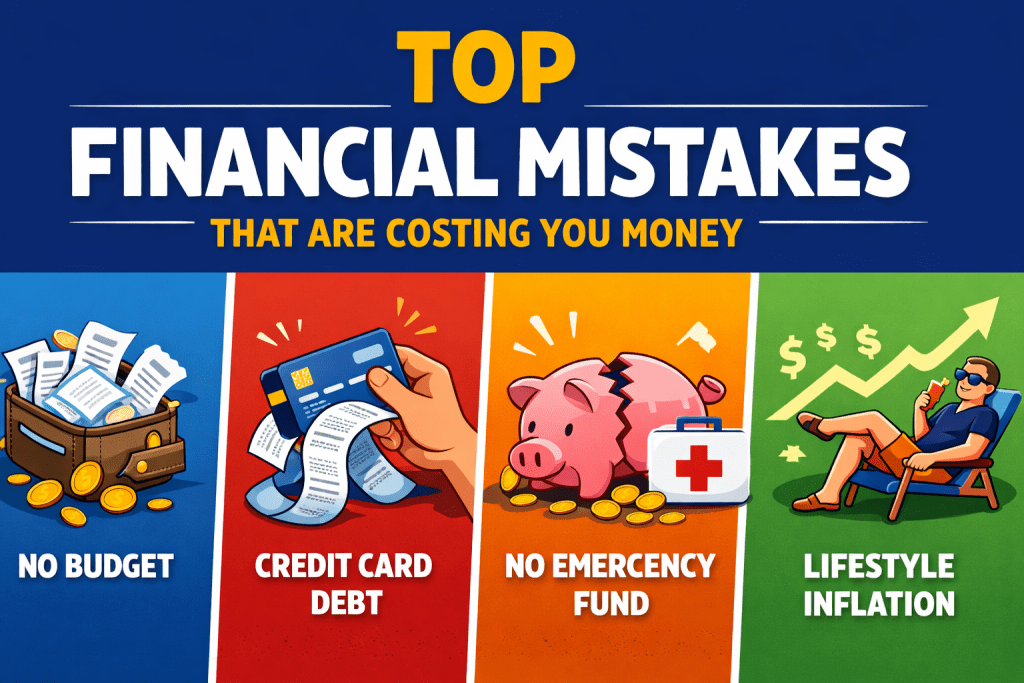
Avoiding Common Money Mistakes
Learn from others—mistakes are expensive.
Common Errors
- Living beyond means
- Ignoring budgeting
- Using credit irresponsibly
- Not saving early
Avoiding mistakes is just as powerful as making smart moves.
Investing Basics for Young Adults
Investing early is like planting a tree—the sooner you start, the bigger it grows 🌳.
Beginner Investment Options
- Index funds
- Mutual funds
- Retirement accounts
You don’t need to be rich to invest—just consistent.
Using Financial Apps and Tools
Technology makes money management easier than ever.
Helpful Tools
- Budgeting apps
- Expense trackers
- Investment platforms
Use tools to stay organized and motivated.
Developing a Long-Term Money Mindset
Money management isn’t a one-time task—it’s a lifestyle.
Think Long-Term
- Delay gratification
- Focus on growth
- Learn continuously
A strong mindset turns average income into extraordinary results.
Conclusion
Money management for students and young adults isn’t about perfection—it’s about progress. Small habits, repeated daily, create massive results over time. Start where you are, use what you have, and take one smart step at a time. Your future self will thank you 💙.
Frequently Asked Questions (FAQs)
1. How can students manage money with low income?
By budgeting carefully, tracking expenses, and saving small amounts consistently.
2. Is budgeting really necessary for students?
Yes. Budgeting helps control spending and reduce financial stress.
3. Should students use credit cards?
Yes, but only with discipline—pay balances in full every month.
4. When should young adults start investing?
As early as possible, even with small amounts.
5. What is the biggest money mistake young people make?
Ignoring saving and spending without a plan.
Advertisement: