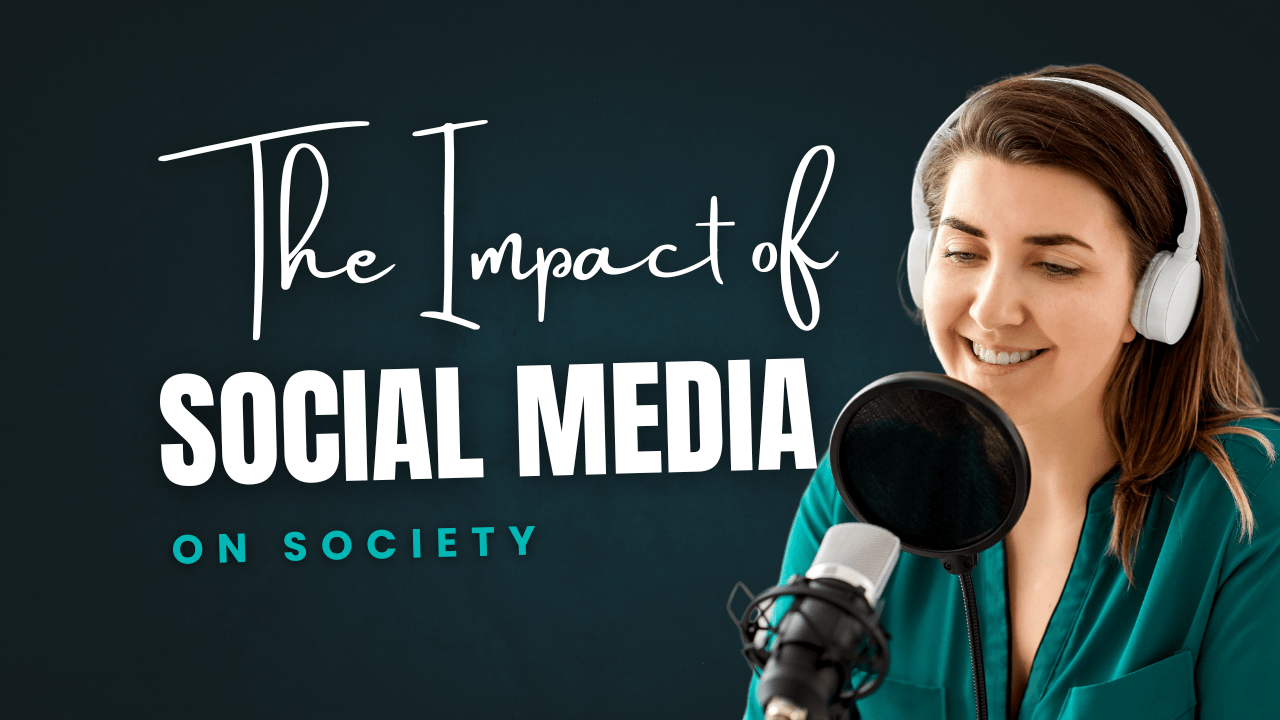
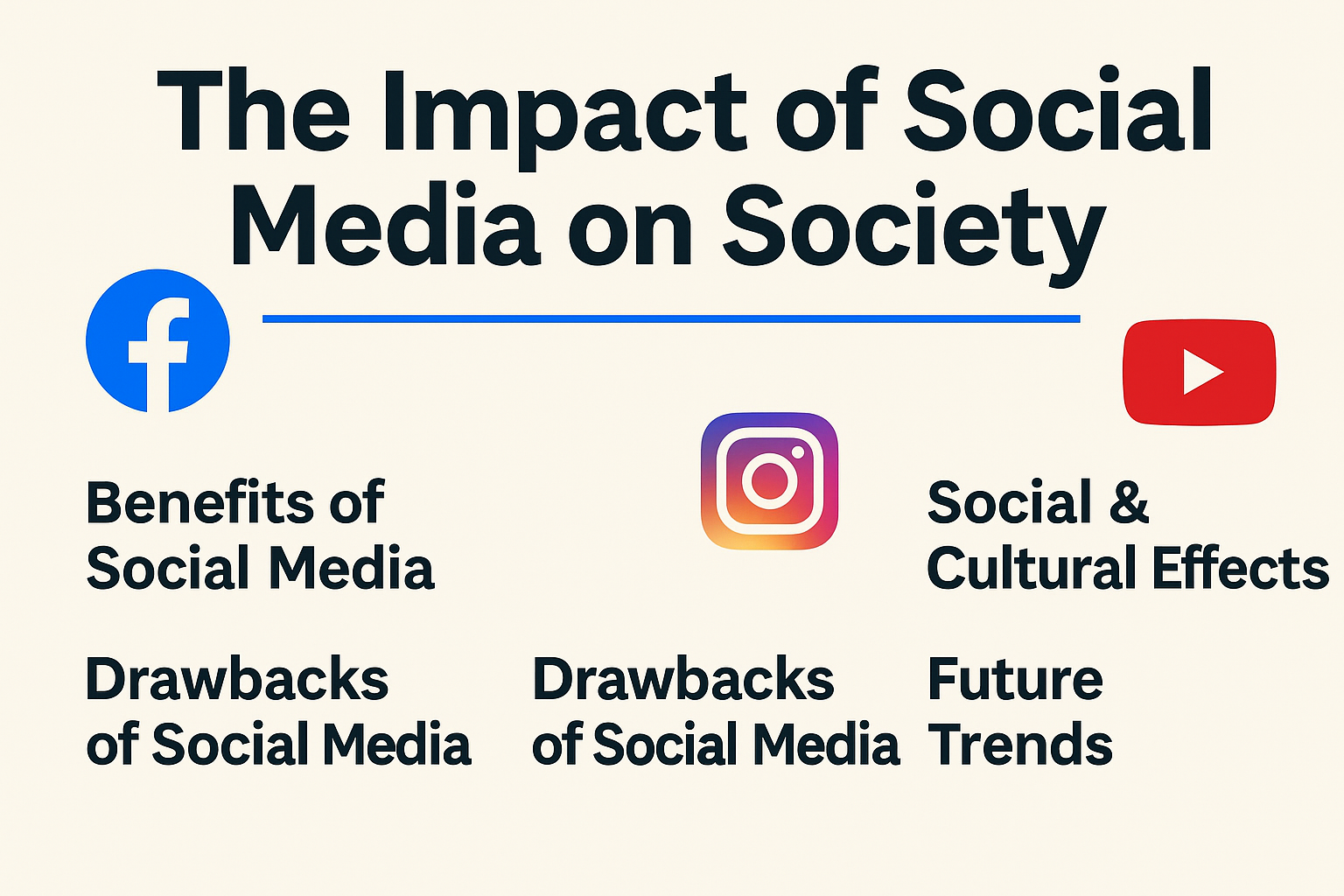
Discover the impact of social media on society. Explore its benefits, drawbacks, cultural influence, and future trends shaping our digital world.
Introduction
Social media is like a giant city we all visit every day — buzzing, messy, alive. Some corners are full of friends and helpful advice; others are loud marketplaces of opinion and distraction. But what exactly is this city doing to us? Is it connecting us, or pulling us apart? In this essay I’ll walk you through the major ways social media shapes modern life: its benefits, its harms, and what we can do to keep the good parts while shrinking the bad. Think of this as a guided stroll through that global digital city — map in hand, eyes open.
The Rise of Social Media
Social media didn’t appear overnight. It grew from message boards, blogs, and early social networks into platforms that billions use daily. Platforms turned communication into an always-on loop: you post a photo, someone comments, an algorithm nudges a trending topic, and suddenly a trivial idea can cross oceans in minutes. This rapid scale-up changed not just how we connect, but how culture moves, how businesses sell, and how politics is organized.
Benefits of Social Media
Enhanced Connectivity & Relationships
At its best, social media keeps relationships alive across distance. Grandparents can watch videos of grandchildren, old friends can rekindle contact, and niche hobbyists can find a tribe. For many people, online communities provide belonging when local options are limited — especially for LGBTQ+ youth, migrants, or those with rare conditions. It’s like having a neighborhood that stretches around the world.
Access to Information & Education
Gone are the days when learning required a classroom or a library trip. Today, a single search or a short video can teach you how to fix a leaky tap, code an app, or understand a complex history lesson. This democratization of knowledge lowers barriers — but it also places responsibility on users to sort signal from noise. In short: access widened, but quality control became our job.
Civic Engagement & Activism
Social media can amplify social causes quickly. Hashtags organize movements, videos document injustices, and crowdfunding powers grassroots campaigns. It’s easier than ever for individual voices to reach millions and for communities to mobilize. This digital megaphone doesn’t replace traditional organizing, but it supercharges visibility.
Economic Opportunities & the Creator Economy
From small-business storefronts to influencers and freelance creators, social media is a new marketplace. People monetize skills, build brands, and connect with customers without gatekeepers. For entrepreneurs with few resources, social platforms can be a springboard — a low-cost way to test ideas and find audiences.
Read Also: How to Remember the Book You Read: Proven Techniques That Work
Drawbacks of Social Media
Mental Health & Well-being
Scrolling can feel like sipping from a firehose of curated moments. Comparing your behind-the-scenes life to someone’s highlight reel can foster anxiety, low self-esteem, and loneliness. For teens and young adults, who are still forming identities, constant social evaluation can be particularly harmful. The result? For many, more screen time correlates with worse subjective mental health.
Misinformation & Polarization
If content that shocks and angers gets more clicks, it spreads faster. That’s the economics of virality. False claims, conspiracy theories, and deceptive memes ride this momentum, contributing to confusion and distrust. Social media can create echo chambers where disagreement is rare, and communities polarize — making healthy democratic debate harder.
Privacy Erosion & Surveillance
Every like, click, and pause can be tracked. Platforms collect troves of personal data for targeted advertising and often operate with opaque rules. Data misuse and breaches have real consequences — from identity theft to subtle behavioral nudging. In a world where attention is currency, privacy is the price many don’t fully see.
Addiction, Distraction & Productivity Loss
The design of many platforms taps into psychological reward loops: notifications, likes, and new content release dopamine. That makes them sticky. For students and professionals, this can translate to fractured attention, procrastination, and lost deep-work hours. In short, social media competes with our focus — and it often wins.
Social & Cultural Effects
Identity, Self-Presentation & FOMO
We curate online selves the same way we pick outfits for a party. This curation affects how identity is formed and perceived. Fear of missing out (FOMO) can push people to chase trends or present exaggerated versions of life. Authenticity becomes a prized — and sometimes performative — commodity.
Language, Memes & Cultural Shifts
Language evolves faster online. Memes, slang, and inside jokes spread globally and reshape humor, politics, and values. This rapid cultural remixing is creative and generative, but it can also trivialize complex issues, reducing them to punchlines that obscure nuance.
Regulation, Policy & Platform Responsibility
Who polices the digital city? Governments, companies, and civil society all play parts. Regulators argue for clearer rules on data protection, algorithmic transparency, and content moderation. Platforms push back citing free expression and technical limits. The ideal? A balance where harmful content is limited, user data is protected, and speech isn’t silenced without cause. Achieving that balance requires legal frameworks, corporate accountability, and public pressure — no single actor can fix it alone.
Mitigation Strategies & Healthy Habits
Media Literacy & Critical Thinking
Teaching people, especially young users, how to evaluate sources, check facts, and recognize bias is key. Media literacy programs empower users to be skeptical consumers — not cynical, but discerning.
Platform Design & Responsible Use
Design changes can help: slower interfaces, fewer autoplay features, clearer privacy defaults, and transparent recommendation systems. On a personal level, practical habits — scheduled phone-free times, notification pruning, and curated follows — can restore control. Treat your attention like a budget; spend it with intention.
Future Trends: Where Are We Headed?
Expect more immersive experiences (AR/VR), deeper integration of social features into commerce, and continued battles over moderation and privacy. AI will make content creation easier — and also make misinformation more convincing. The winners will be platforms and users who adopt clear standards, prioritize user well-being, and innovate responsibly.
Case Studies & Real-World Examples
Think of movements like #MeToo or global fundraising after natural disasters — these show social media’s power to connect and mobilize quickly. On the flip side, misinformation campaigns during elections highlight risks. Small businesses using short-form video to grow sales demonstrate economic opportunity. These real-world examples prove the platform’s dual nature: tool and troublemaker, depending on use.
Conclusion
Social media is not a villain or a hero — it’s a mirror and a magnifier. It reflects our best impulses (connection, creativity, solidarity) and amplifies our worst (bias, haste, addiction). The balance between benefit and harm depends on us: on how platforms are built and regulated, how communities enforce norms, and how we individually manage attention. If we treat social media as a powerful civic tool rather than just entertainment, we can shape it to nourish society — not erode it.
FAQs
Q1: How does social media harm mental health?
A1: Social media can promote unhealthy comparison, disrupt sleep, and create anxiety via constant social evaluation and FOMO. For vulnerable users, these factors can cumulatively contribute to depression and stress. Healthy habits and limits help.
Q2: Can social media be regulated without limiting free speech?
A2: Yes, but it’s delicate. Thoughtful regulation targets clear harms (e.g., illegal content, harassment, data misuse) while preserving space for legitimate expression. Transparency and judicial oversight help maintain balance.
Q3: What are practical steps to reduce social media addiction?
A3: Set notification limits, use app timers, schedule phone-free hours, curate your feed to reduce negativity, and practice single-tasking during work or study to rebuild focus.
Q4: Are there real economic benefits for creators and small businesses?
A4: Absolutely. Creators monetize via sponsorships, ads, and direct support (subscriptions, tips). Small businesses use targeted ads and organic content to reach audiences inexpensively. Success requires consistency and quality.
Q5: How can I spot misinformation online?
A5: Check the source credibility, cross-check facts with reliable outlets, look for author attribution, verify dates, and be wary of sensational headlines. If something triggers strong emotion, pause and verify before sharing.
Read Also: How to Make Money Online in 2025: 20 Legit Methods That Work