Skip to content
Study_Material_logo

Study Material

Study Notes, Study Guides, Articles, MCQS

Primary Menu
  • HOME
  • Education
    • Mcqs
    • Essays
    • Applications
    • Dialogues
    • Past Papers
    • Notes
    • Career Counseling
  • Articles
    • Insurance
      • Health Insurance
    • Online Earning
    • Finance & Money
    • Information Technology Articles
    • Education Articles
    • Jobs Articles
    • Media & Advertising Articles
    • Business Articles
    • Health Articles
  • Teach
    • Healthy Heart
    • Power of Mind
    • New Essays
  • More
    • Questions & Answers
    • Tips
    • Informal Letters
    • Personal Letters
    • Stories
  • Online Earning Methods
  • Blog
  • Finance & Money

Understanding Credit Scores and How to Improve Them: A Complete Beginner’s Guide

admin January 12, 2026
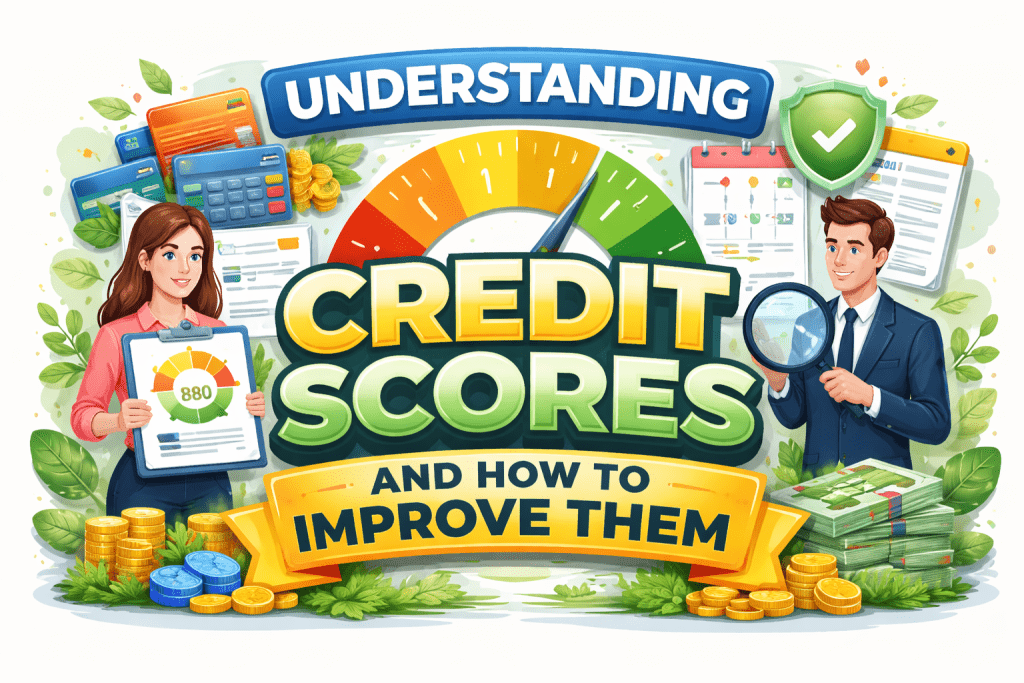
Understanding Credit Scores and How to Improve Them

Understanding credit scores and how to improve them is essential for financial success. Learn what affects your credit score, why it matters, and proven tips to increase it over time.

A credit score is one of the most important numbers in your financial life. It affects your ability to get loans, credit cards, housing, and even favorable interest rates. Yet many people don’t fully understand how credit scores work or how to improve them. This guide explains credit scores in simple terms and provides practical steps you can take to raise yours over time.


What Is a Credit Score?

A credit score is a three-digit number that represents your creditworthiness—how likely you are to repay borrowed money on time. Lenders use it to assess risk before approving loans or credit cards.

Most credit scores range from 300 to 850:

  • Excellent: 750–850
  • Good: 700–749
  • Fair: 650–699
  • Poor: Below 650

The higher your score, the better your chances of approval and the lower your interest rates.


How Credit Scores Are Calculated

Although scoring models may vary, most credit scores are based on five main factors:

1. Payment History (35%)

This is the most important factor. It reflects whether you pay your bills on time. Late payments, missed payments, and defaults can seriously damage your score.

2. Credit Utilization (30%)

Credit utilization is the percentage of your available credit that you’re using. For example, if your credit limit is $10,000 and you’re using $3,000, your utilization is 30%. Keeping this below 30%—ideally under 10%—is best.

3. Length of Credit History (15%)

This measures how long you’ve been using credit. Older accounts help your score, so keeping long-standing accounts open can be beneficial.

4. Credit Mix (10%)

Lenders like to see a mix of credit types, such as credit cards, personal loans, auto loans, or mortgages. A healthy mix shows you can manage different forms of credit.

5. New Credit (10%)

Opening many new accounts in a short time can lower your score. Each credit application may trigger a hard inquiry, which can temporarily reduce your score.



Why Credit Scores Matter

A good credit score can help you:

  • Get approved for loans and credit cards
  • Qualify for lower interest rates
  • Pay less in interest over time
  • Improve chances of renting a home
  • Reduce security deposits on utilities

On the other hand, a low credit score can limit financial opportunities and increase borrowing costs.


How to Improve Your Credit Score

Improving your credit score takes time, but consistent habits make a big difference. Here are proven strategies:

1. Pay Bills on Time, Every Time

Late payments hurt your score the most. Set up automatic payments or reminders to ensure you never miss a due date—even one late payment can have a negative impact.

2. Reduce Credit Card Balances

Lowering your balances reduces your credit utilization. Try paying more than the minimum each month, or focus on paying down one card at a time.

3. Keep Old Accounts Open

Closing old accounts can shorten your credit history and increase utilization. If an account has no annual fee, it’s often better to keep it open.

4. Avoid Unnecessary Credit Applications

Only apply for credit when you truly need it. Too many hard inquiries in a short period can lower your score.

5. Check Your Credit Report Regularly

Errors on credit reports are more common than you might think. Review your report and dispute any incorrect information, such as payments marked late when they were paid on time.

6. Build Credit If You’re New

If you have little or no credit history, consider:

  • A secured credit card
  • Becoming an authorized user on a trusted person’s card
  • A credit-builder loan

These options help establish positive payment history.


How Long Does It Take to Improve a Credit Score?

There’s no instant fix. Minor improvements can happen within a few months, while major improvements may take a year or more. The key is consistency—paying on time and keeping balances low month after month.


Common Credit Score Myths

  • Checking your own credit lowers your score: False. Checking your own report is a soft inquiry and does not affect your score.
  • You need to carry a balance to build credit: False. Paying your balance in full each month is better.
  • Income affects your credit score: False. Credit scores are based on credit behavior, not income level.

Final Thoughts

Understanding credit scores empowers you to take control of your financial future. By paying bills on time, managing credit wisely, and monitoring your credit report, you can steadily improve your score. A strong credit score opens doors to better financial opportunities, lower costs, and greater peace of mind. Start with small, consistent steps today, and your credit profile will improve over time.

Advertisement:

school-management-software

Tags: building credit history checking credit report credit management tips credit score basics credit score explained credit score factors credit score for beginners credit score tips credit utilization ratio financial credit tips fix bad credit good credit score benefits how to improve credit score improve credit rating increase credit score fast payment history impact personal finance credit guide understanding credit scores ways to boost credit score what affects credit score

Post navigation

Previous: The Best Ways to Grow Your Money Over Time: 10 Proven Strategies for Financial Success
Next: How to Pay Off Debt Faster and Smarter in 2026: A Step-by-Step Guide

Related Stories

Financial Planning 101
  • Finance & Money

Financial Planning 101: A Step-by-Step Guide to Managing Money and Building Wealth

admin January 15, 2026 0
How to Make Your Money Work for You
  • Finance & Money

How to Make Your Money Work for You: (9-Step Guide)

admin January 15, 2026 0
Simple Money Saving Tips for Everyday Life
  • Finance & Money

Simple Money Saving Tips for Everyday Life: Practical Ways to Save More Daily

admin January 14, 2026 0
  • Individual vs Family Health Insurance
    Individual vs Family Health Insurance: Which Plan Is Right for You?
  • How to Choose the Best Health Insurance Plan for Your Family
    How to Choose the Best Health Insurance Plan for Your Family
  • Health Insurance 101: A Beginner’s Guide to Medical Coverage
    Health Insurance 101: A Beginner’s Guide to Medical Coverage
  • Financial Planning 101
    Financial Planning 101: A Step-by-Step Guide to Managing Money and Building Wealth
  • How to Make Your Money Work for You
    How to Make Your Money Work for You: (9-Step Guide)
  • 10 Proven Strategies to Grow Your Business in 2025
    10 Proven Strategies to Grow Your Business in 2025
  • 10 Smart Money Habits That Will Make You Wealthy Over Time
    10 Smart Money Habits That Will Make You Wealthy Over Time
  • 10 Smart Ways to Manage Your Child’s Summer Vacation Effectively
    10 Smart Ways to Manage Your Child’s Summer Vacation Effectively
  • 100 Advanced English Grammar MCQs with Answers
    100 Advanced English Grammar MCQs with Answers
  • 100 Basic English Grammar MCQs with Answers (Practice Test)
    100 Basic English Grammar MCQs with Answers (Practice Test)
Work from home jobs

Categories

  • How is the life of a being a doctor in Sweden?How is the life of a being a doctor in Sweden?
  • What is the best way to stay healthy?What is the best way to stay healthy?
  • Skills You Need That School Never Taught YouSkills You Need That School Never Taught You
  • The Importance of Mental Health Awareness in SchoolsThe Importance of Mental Health Awareness in Schools
  • Earning on TikTok: 10 Tips and Tricks for SuccessEarning on TikTok: 10 Tips and Tricks for Success

  • Brilliant small Business Ideas for college students to Make Extra MoneyBrilliant small Business Ideas for college students to Make Extra Money
  • Six unusual habits of the worldSix unusual habits of the world
  • Top 20 E-Learning Platforms to Upgrade Your Career SkillsTop 20 E-Learning Platforms to Upgrade Your Career Skills
  • Best Modern Tools of Online EducationBest Modern Tools of Online Education
  • How Important Is Education? A Comprehensive ExplorationHow Important Is Education? A Comprehensive Exploration

Archives

  • Home
  • Essays
  • Articles
  • Stories
  • Applications
  • Personal Letters
  • Informal Letters
  • Dialogues

You may have missed

Individual vs Family Health Insurance
  • Health Insurance

Individual vs Family Health Insurance: Which Plan Is Right for You?

admin January 17, 2026 0
How to Choose the Best Health Insurance Plan for Your Family
  • Health Insurance

How to Choose the Best Health Insurance Plan for Your Family

admin January 17, 2026 0
Health Insurance 101: A Beginner’s Guide to Medical Coverage
  • Health Insurance

Health Insurance 101: A Beginner’s Guide to Medical Coverage

admin January 17, 2026 0
Financial Planning 101
  • Finance & Money

Financial Planning 101: A Step-by-Step Guide to Managing Money and Building Wealth

admin January 15, 2026 0

Articles

  • Business Articles
  • Education Articles
  • Health Articles
  • Information Technology Articles
  • Jobs Articles
  • Media & Advertising Articles
  • Career Counseling
  • Insurance
  • Online Earning

Questions & Answers

  • Medical
  • History
  • Women’s Health
  • Weight Loss & Obesity
  • Stress Management
  • Pain Management
  • Oral Health
  • Multiple Sclerosis

MCQS

  • English
  • Biology
  • Physics
  • Mathematics
  • Urdu
  • Islamiat
  • Pak Studies
  • Computer
Copyright © All rights reserved. | MoreNews by AF themes.